















Episode 35: Halloween in the Classroom: Costumes, Candy & Chaos | The Edu20/20 Podcast

The Edu20/20 Podcast
October 28, 2026
Halloween in the classroom is a special kind of chaos, especially when the candy starts flowing and classroom management goes out the window. In this Halloween edition of After Hours, Courtney and Shannon share their funniest Halloween memories from teaching, childhood costume disasters, creative school dress-up ideas, and a few classroom pranks that probably wouldn't fly today. From homemade costumes and sugar hangovers to inflatable Ursula and a teacher being chased across the playground dressed as a banana, things get appropriately ridiculous.
Timestamps
00:00 Welcome to the Halloween After Hours special
02:00 Courtney’s modeling career and other distractions
05:05 Halloween traditions in the classroom
07:15 The dreaded post-Halloween sugar hangover
09:03 Childhood Halloween costume disasters
11:28 Favorite costumes and school dress-up ideas
15:56 Classroom pranks and spooky teaching stories
Episode 34 After Hours: When Doing the Right Thing Makes You the Villain | The Edu20/20 Podcast
The Edu20/20 Podcast
October 27, 2026
Sometimes doing what’s right means being the villain in someone else’s story. In this After Hours episode, Courtney and Shannon talk about the very thin line between heroes and villains, especially when you're making hard decisions, setting boundaries, leading others, or having conversations people don't want to hear. They share personal stories about people pleasing, competition, leadership, self-reflection, and learning to stay focused on your purpose even when other people don't agree with you.
Timestamps
00:00 Welcome to After Hours
00:43 The difference between a hero and a villain
03:41 When you’re the villain in someone else’s story
07:05 Being okay with hard decisions
09:37 Competition, comparison & staying focused on your why
12:57 Why leaders have to have hard conversations
16:58 The importance of self-reflection
Stop Avoiding Resistance: What to Do When Coaching Receives Pushback

Shannon Streett,
Chief of Staff & Development
October 22, 2026
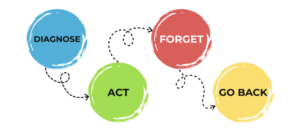
To address teacher resistance to instructional coaching, start by clarifying the purpose of coaching, identifying what’s behind the pushback, and matching your response to the teacher’s needs. The "Diagnose → Act → Forget → Go Back" framework helps instructional coaches navigate difficult conversations, build trust, and keep coaching focused on improving instruction and student learning.
The Reality of Pushback
One of our team members tells a story about when she first started teaching. Her brand-new coach popped her head into a classroom where teachers were planning together and said, “Hi, everyone! Just here to let you know that I didn’t drink the district Kool-Aid yet, I’m still one of you! I’m just here to support and we are all a team. I will start individual coaching soon, but no stress.”
Can you imagine the teachers’ reactions? If they didn’t already know what instructional coaching was about, they were just programmed to be on high alert. And if they did, well, the door was just opened for them to invite familiar pushback in.
“My kids can’t do that.”
“We tried that already.”
“I’ve been teaching for 16 years. Why do I have to change?”
This type of resistance is not new, but it is real and it gets very uncomfortable, very fast. When it rears its head, it’s easy to default to avoiding the teacher, backing off, or staying frustrated while biting your tongue and trying to focus on those who are willing to be coached. But if we stay in default mode, coaching stalls and students lose. Instead, we need a reframe to understand it.
Resistance is a sign that coaching is touching on something real. In her book How to Coach Teachers to Teach (Almost) Anything, Jill Jackson gives us the best advice:
EVERY SINGLE COACHING PRACTICE is met with resistance. If it’s not met with some push back along the way, I would guess that the coach isn’t asking anyone to change anything. (p. 105)
As instructional leaders, we have to treat pushback as information, not failure. And, more importantly, we need a simple framework to manage it instead of reacting (or, not acting at all). We learned this simple yet powerful strategy from Jill. She taught us to diagnose what is potentially at the root of resistance, act to work through the resistance with the teacher, forget how they acted, and go back to coach again in the next cycle:
Diagnose: Check Yourself First
Here’s a hard truth. Before we ever label a teacher as resistant, we have to ask ourselves if we ever gave them anything to say “yes” to. And by yes, we mean laying a collaborative groundwork for coaching: the purpose or the “why.” Without a “why,” coaching feels like, “Am I in trouble?” “Who’s checking on me?” or “What did I do wrong?” Remember the brand-new coach from our opening story? She meant well, but instead of sharing why coaching existed and what everyone was working toward, she distanced herself from the purpose altogether. Her teachers had nothing to say yes to.
The leadership team has to check themselves first. The principal must set the “why” of coaching by communicating a collective instructional goal and how coaching will be used to reach it. The instructional coach has to keep the “why” alive, reinforcing it in every coaching cycle and driving improvement toward that goal.
This foundation is critical. Without a purpose, resistance is a reasonable response. The fix is communication. If you can’t answer these in one sentence each, start here.
- Our school’s instructional goal is…
- Coaching exists here because…
- Coaching will look like…
If you need to bring even more clarity to your coaching launch conversations or see a few examples, use this free resource as a springboard: Coaching Launch Conversations: Example Scripts.
Diagnose: What’s Underneath the Pushback
Once you’ve checked yourself and you find that resistance is still there, it’s time to look at the underlying cause. It is really important here to consider data or facts from the teacher’s conversation, not how the conversation made you feel. Here are a few examples:
| Common Resistance | Possible Underlying Causes |
| They embrace defeatism | The teacher feels it’s safer not to try anything than to try something and fail or look foolish. (Because it’s HARD!) |
| They lack confidence | The teacher is scared she doesn’t have what it takes to reach the principal’s instructional goal. |
| They fear failure | The teacher doesn’t want to be seen as weak or less than professional as she gets her self-worth from being valuable to others. |
| They have a negative history | The teacher truly has been burned and is afraid to trust the coach (or herself!) out of fear it will happen again. |
Once you identify a possible underlying cause, it’s much easier to choose a path forward when it’s time to act. But a note of caution– sometimes what looks like resistance is actually indifference. If the teacher’s response leans more toward indifference, treat it as an opening and begin coaching. Trust is built through the process over time, especially when teachers can see the improvement in their own instructional data.
Act: Match Your Approach to the Cause
This step is where the instructional leader moves from being reactive to being responsive by choosing an intentional approach. Let’s consider some possible moves that match the underlying cause of resistance shown previously.
| IF… | THEN… |
| They embrace defeatism | Model something very simple for the teacher with her students and have the teacher collect specific data during your model. (Ex: number of students who responded to a question) Then debrief the results together so she sees success is possible. |
| They lack confidence | Choose a skill the teacher is close to mastering, and go for a quick win. |
| They fear failure | Break off a tiny chunk of content at a time, and keep the teacher focused on that ONE THING instead of the big picture. |
| They have a negative history | Ask the teacher to pinpoint where coaching went south and what the trigger point was so that you can avoid it. |
These are just a few examples of some actions you can take, but sometimes that may not be enough. Sometimes….(insert big dramatic pause)…it’s more about OUR skill level in conversations than about the teacher’s actual response.
So what do we do?
Let’s be real– who actively goes out and seeks hard conversations? (Not us, looking away quickly!) But managing hard conversations requires real skills at different levels to make a real impact. Are you able to:
|
Level 1: Regulate YOURSELF (your body reactions, your mind) when pushback appears |
If you’d like to know more about these levels or get a jumpstart on improving your conversational skill set, start here → Responding to Resistance: Conversation Skills.
Forget How They Initially Acted
Don’t carry feelings from the last pushback conversation into the next one. Jill Jackson said it best:
Resistance to coaching doesn’t have to be tricky. It should be anticipated and managed. And as you’re managing it, you shouldn’t use resistance as the marker of whether your coaching is successful or not. (p. 105)
Go Back and Keep Coaching
In her book, Jill borrows a line from Dan Rockwell that we keep central to our work: ‘The point of resistance is where the fruit appears.’ And it’s so true. Our job as instructional leaders is to create and hold a vision for student learning, and we only get different results when we take different actions. The status quo doesn’t serve any of us in moving effective instruction forward. It takes action and consistency. Forget past feelings and keep going back. There is one big caveat that we have to acknowledge. What do we do when the pushback is downright rude and borderline unprofessional? Keep going back, and if it continues after three tries, it may be time to tag in the principal. Here’s how Jill handles it in her book:
I go back three times and act like they’re not resistant.
Three times.
On the rarest occasion…I will talk with the principal and say something like, ‘You know, I am not confident I can coach [name] successfully. Would you be willing to coach her for a while until she’s a bit more ready for me? (p. 109)
The Investment of Coaching
Coaching is an investment that requires a return, not just activity. But resistance isn’t the marker of whether coaching is working. We stop avoiding resistance by diagnosing it, acting on it, forgetting how it felt, and going back, all while sharpening our conversation skills. If you’d like one more tool to think through the Diagnose→Act→Forget→Go Back framework, here’s a list of self-questions to get you exactly where you need to go: Stop Avoiding Resistance Resource.
Every coach meets resistance. The ones who grow are the ones who keep going back with a plan. If you’re ready to build that plan, explore the Edu20/20 Instructional Coaching Institute.
Episode 33: How to Make PLCs Actually Worth Teachers’ Time | The Edu20/20 Podcast
The Edu20/20 Podcast
October 16, 2026
PLCs and teacher collaboration should help teachers solve problems, plan instruction, and improve student learning. But when meetings aren't connected to an actual need, they can quickly feel like one more thing on a teacher's plate. In this episode, Courtney and Shannon break down common PLC mistakes and share how leaders can make collaborative planning more purposeful. They discuss differentiating support for teachers, using student work effectively, introducing new strategies without overwhelming teachers, and structuring collaboration so teachers actually leave with something they can use.
Timestamps
00:00 Welcome to the Edu20/20 Podcast
01:45 What makes collaborative planning effective?
02:41 When PLCs waste teachers’ time
06:21 Using student work effectively
11:07 How to introduce new strategies
14:09 How to structure better PLCs
#PLCs #CollaborativePlanning #InstructionalCoaching #SchoolLeadership #TeacherSupport
Episode 31: How to Make Classroom Walkthroughs Useful
The Edu20/20 Podcast
October 7, 2026
In this episode, Courtney and Shannon break down what makes a classroom walkthrough effective, why compliance-focused observations can damage teacher trust, and how leaders can use walkthrough data to provide practical feedback and plan meaningful teacher support.
rnrnTimestampsrnrn00:00 Are classroom walkthroughs good or bad?rn02:21 When a four-minute walkthrough goes wrongrn04:30 What makes an effective classroom walkthrough?rn06:32 Why walkthrough feedback mattersrn08:03 Use walkthrough data to plan teacher supportrn10:41 What actionable feedback actually looks likern14:19 Building trust through honest conversationsrnrn🎁 Free Resource: Watch our Beyond the Checklist: Making Walkthroughs Work for You webinar and access the accompanying walkthrough resource:rnedutwentytwenty.com/courses/tiering-without-tears-differentiating-your-instructional-coaching/rnrn#ClassroomWalkthroughs #InstructionalCoaching #SchoolLeadership #TeacherFeedback #Edu2020
Beyond the Checklist: Making Walkthroughs Work For You
Shannon Streett,
Chief of Staff u0026 Development
October 6, 2026
Every box is checked. So what changed for teachers or students?rnrnIf you’re a principal or an instructional coach, you know this checklist. Walkthroughs land on the calendar because the district requires them. Every classroom gets a visit, the data gets turned in, and the box gets checked. But a checked box doesn’t tell you what to do next, and it doesn’t help a single teacher grow.

✓ Curriculum implementation walkthroughs = done.
✓ Every teacher’s been seen = done.
✓ Data turned in to the district = done.
Every box is checked. So what changed for teachers or students?
If you’re a principal or an instructional coach, you know this checklist. Walkthroughs land on the calendar because the district requires them. Every classroom gets a visit, the data gets turned in, and the box gets checked. But a checked box doesn’t tell you what to do next, and it doesn’t help a single teacher grow.
Think back to when you were in the classroom. When someone walked in with a clipboard, how did you feel?
Scroll through teacher social media and you’ll see how many teachers feel today: anxious, frustrated, and sometimes even angry about walkthroughs. That frustration is valid, and it’s giving us real-time information that is worth listening to.
Leader tension is real, too. Leaders have to be in classrooms, and without a clear plan, the urgent stuff wins every time. Scheduled walkthroughs fix that by putting classrooms on the calendar. But a walkthrough on the calendar isn’t the same as a walkthrough with a purpose. When walkthroughs happen just for compliance, they break trust.
I’ve been on both sides of the walkthrough clipboard. As a teacher, I knew the drill: the notice, the knot in my stomach, two or three observers in the back of my room, scribbling notes. Then they left, and I never heard another word. No feedback. No next step. Looking back, those walkthroughs checked every box. But nothing changed for me or my students, because no one ever came back to tell me what they saw, what to try next, or how it would shape the support we got.
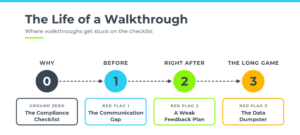
Going beyond the checklist means creating walkthroughs that actually work for you. And a walkthrough only works for leaders when it also works for teachers. Let’s go through the lifespan of a walkthrough: the ground zero issue that starts it all, three red flags we see over and over, and the green flag moves that fix each one.
Ground Zero: The Compliance Checklist
Before we get to the red flags, we have to start at the root. Most walkthrough problems grow out of one thing: walkthroughs that happen because the district said so.
They get thrown on the schedule. Every classroom gets visited. Or the coach goes around alone while the principal isn’t really involved. Either way, the walkthrough becomes the goal instead of a tool, and it’s missing a purpose.
Let’s be clear about one thing: we’re not talking about your walkthrough tool or form. The tool isn’t the problem. The compliance mindset is. The checklist we’re talking about is the compliance checklist: every teacher seen, box checked, done.
If leaders aren’t crystal clear on why they’re doing walkthroughs, teachers won’t be either. And that’s where trust begins to break down.
Green Flag Move: Know Your Purpose
Know your “why” before it ever hits the calendar. Start by answering the most important question:
Why are we doing these walkthroughs, and what are we going to do with what we see?
If you can’t clearly and confidently answer that question, don’t proceed with those walkthroughs yet. That’s the first step beyond the checklist.
Once you know your why, the next step is making sure your teachers know it too.
Red Flag #1: The Communication Gap
What It Looks Like: Teachers don’t know when you’re coming, what you’re looking for, or what happens with what you see. So they fill in the blanks themselves, and they usually fill them with worry. (Or they do what my teaching partners and I did: create a code for the group chat. THE EAGLE HAS LANDED, everyone.)
Green Flag Move: Communicate
Give a window, not a surprise. You don’t have to name the exact day and time. Something as simple as “Our team will be visiting classrooms next week” goes a long way.
We hear the pushback: “If I tell them, I’ll get a dog and pony show.” You can still give a window without naming the exact day. Walking into a room full of anxiety, with a teacher who feels completely unprepared, doesn’t do anybody any good.
Name the look-fors. Tell teachers what you’re coming to see. Maybe it’s curriculum implementation. Maybe it’s a recent lesson planning expectation, like posting objectives or success criteria. Maybe you’re looking for instructional trends to decide next steps for collaboration or coaching support.
Tell them how the data will be used. Say what it’s for: coaching cycles, teacher collaboration, and professional development decisions. Then say what it’s not for. Every teacher is quietly wondering, “Is this going in my file?” Answer that question before they have to ask it.
Need a starting point? Our Example Communication Email shows all three moves in action. Read it and look for the window, the look-fors, and how the data will be used. Then tailor it to your own walkthrough focus.
Communication sets the promise. The feedback conversation is where you keep it.
Red Flag #2: A Weak Feedback Plan
What It Looks Like: Walkthrough feedback shows up as a generic form email, a face-to-face conversation that comes weeks too late, or nothing at all. The connection between coaching and instructional improvement is built on trust and face-to-face relationships. A form email doesn’t build either.
The pushback we hear most: “I don’t have time to have a conversation with every single teacher.” Fair. But we’re not talking about a full coaching conversation.
Green Flag Move: Have a Feedback Plan
Keep it to 5–10 minutes, face to face. Answer two questions for the teacher:
- What moves did you make that were positively impacting student learning?
- What was getting in the way of learning the most, and what is one move that could improve it in the very next lesson?
That’s it. The teacher walks away with one thing they’re doing well and one next step to level up.
Immediate is best. Fast feedback lowers anxiety fastest. If more than one person is doing walkthroughs, try tag-team coverage: one person covers the class while the teacher steps into the hall for a quick conversation. Immediate feedback, no stress.
Pre-schedule the conversations. If immediate isn’t possible, schedule the feedback conversations when you schedule the walkthroughs. Then they don’t get lost when the week gets busy.
Match feedback to the focus you communicated. If you told teachers you’d be looking at curriculum implementation, give feedback on curriculum implementation. You can collect other data for trends, but don’t surprise teachers with it.
So the teacher gets their feedback. Now, what happens to everything you collected?
Red Flag #3: The Data Dumpster
What It Looks Like: The data gets collected, but there’s no clear plan for it. Maybe it was collected just to check the box. Maybe plans were made, life happened, and now it’s sitting in a binder nobody opens. Or the coach is so caught up in individual coaching cycles that there’s no bigger vision for the data.
Be honest: where does your walkthrough data live right now?
Green Flag Move: Use Data as a Compass
Let the data show you the need. Walkthrough data should drive three things:
- Individual coaching cycles
- Teacher collaboration and planning support
- Professional development choices
If we’re spending time, energy, and money, it needs to be based on a real need. The data you collected is your compass.
Have a plan for every walkthrough. Decide what happens with the data before you ever collect it. (Notice how that brings us right back to ground zero?)
Take a look at our Example School Trend Report. It shows what’s working and what’s getting in the way for each teacher, school-wide trends, and what it all means for coaching priorities. As you read it, ask yourself: how could this data address individual needs, and how could it shape collaborative planning support?
One important note: the school trend report is NOT shared with teachers. It includes individual classroom observation data and is meant for coaching conversations and planning. Teachers get their feedback through face-to-face conversation.
A checklist ends when the box is checked. A walkthrough that works ends with a plan.
Beyond the Checklist: Putting It All Together
Here’s the life of a walkthrough that actually works:
- Why: Know your purpose.
- Before: Communicate the window, the look-fors, and how the data will be used.
- Right after: Have a feedback plan: 5–10 minutes, face to face, matched to the focus.
- The long game: Use data as a compass.
The checklist tells you every teacher’s been seen. Going beyond it tells you what to do next. When walkthroughs work for your teachers, they work for you.
Free Resources to Get You Started
You don’t have to create a complicated plan or start with a blank page. We made these for you to tailor to your own walkthrough focus:
- Beyond the Checklist Planning Guide: answer the planning questions for each green flag move before your next round of walkthroughs.
- Example Communication Email: a model for letting teachers know what to expect.
- Example School Trend Report: a model for turning walkthrough data into coaching and collaboration next steps.
Where This Goes Next
Whether you’re a principal leading walkthroughs or a coach doing baseline walkthroughs, a walkthrough is only as strong as the coaching conversation that follows it. Coaching is an investment that requires a return, not just activity.
If this post gave you the walkthrough jumpstart, our coaching institutes are where you and your coaches build a framework for coaching that keeps momentum and impacts student learning:
- Instructional Coaching Institute (ICI): for coaches ready to build methodology.
- District Instructional Coach Training (DICI): for districts training coaches at scale, and principals who want their leadership team and coaches on the same page.
- Virtual Instructional Coaching Institute (VICI): for coaches who want the Institute experience remotely.
Learn more about our coaching institutes
Episode 29: Do Teachers Still Need Lesson Plans? | The Edu20/20 Podcast
The Edu20/20 Podcast
September 15, 2026
With high-quality instructional materials doing much of the heavy lifting, do teachers still need to lesson plan? Yes, but that doesn't mean spending hours creating detailed plans no one ever looks at.rnrnIn this episode, Courtney and Shannon break down how teachers and school leaders can simplify lesson planning by focusing on the planning moves that actually impact instruction and create accountability without turning lesson plans into another compliance task.
rnrnWith high-quality instructional materials doing much of the heavy lifting, do teachers still need to lesson plan? Yes, but that doesn’t mean spending hours creating detailed plans no one ever looks at.rnrnIn this episode, Courtney and Shannon break down how teachers and school leaders can simplify lesson planning by focusing on the planning moves that actually impact instruction and create accountability without turning lesson plans into another compliance task.rnrnTimestampsrn00:00 The lesson planning debatern01:48 Do teachers still need lesson plans with HQIM?rn03:14 Why teachers still need to plan before teachingrn05:36 Should leaders require lesson plans?rn06:53 How to simplify lesson planningrn07:40 The Big Four lesson planning movesrn09:02 Leaders: Model your lesson planning expectationsrn10:42 How to monitor lesson plans without checking every onern13:05 Building a manageable lesson planning systemrn15:06 Explain the u0022whyu0022 behind your expectationsrn16:31 What nearly 400 classroom observations taught us
Episode 28: Get to Know Us: Books, Concerts, Cult Stories & Teacher Stress | The Edu20/20 Podcast
The Edu20/20 Podcast
September 15, 2026
What happens when we ditch the education talk and just start asking each other questions? Things get weird pretty quickly.rnrnIn this After Hours episode, Courtney and Shannon share their favorite books, concerts and TV shows, tell a few cult stories, introduce some very particular children and cats, and discuss their highly scientific methods for surviving stress.
rnrnWhat happens when we ditch the education talk and just start asking each other questions? Things get weird pretty quickly.rnrnIn this After Hours episode, Courtney and Shannon share their favorite books, concerts and TV shows, tell a few cult stories, introduce some very particular children and cats, and discuss their highly scientific methods for surviving stress.rnrnTimestampsrn00:00 Welcome back to After Hoursrn01:30 Our favorite books and seriesrn04:33 Favorite concerts u0026amp; our Swiftie confessionrn06:14 Concerts, cult life u0026amp; cheating for the Lordrn08:16 Our favorite TV showsrn09:56 Kids, cats u0026amp; extremely picky eatersrn12:28 How we deal with stress
Episode 26: The Teachers You’ll Find in Every Professional Development | The Edu20/20 Podcast
The Edu20/20 Podcast
September 15, 2026
Every professional development session has the same cast of characters: the eager learner, the side talkers, the emergency phone-call person, the paper grader, and the one who always has something to add or question.rnrnIn this After Hours episode, Courtney and Shannon confess their own bad PD behavior, share stories from leading teacher training, and somehow end up discussing Vaseline, gloves, and school bathroom emergencies.
rnrnEvery professional development session has the same cast of characters: the eager learner, the side talkers, the emergency phone-call person, the paper grader, and the one who always has something to add or question.rnrnIn this After Hours episode, Courtney and Shannon confess their own bad PD behavior, share stories from leading teacher training, and somehow end up discussing Vaseline, gloves, and school bathroom emergencies.rnrnTimestampsrn00:00 Welcome back to After Hoursrn01:01 Bad teacher behaviors in professional developmentrn03:22 When the room gives you absolutely nothingrn05:03 The people you meet in every PDrn09:20 Grading papers during staff meetingsrn11:00 The person who always knows morern13:03 The Vaseline and gloves storyrnrnu0026nbsp;
Episode 25: Classroom Walkthrough Red Flags that Break Teacher Trust | The Edu20/20 Podcast
The Edu20/20 Podcast
September 15, 2026
Classroom walkthroughs should help leaders make better decisions about coaching and teacher support. But when the purpose is unclear, the data goes unused, or teachers never receive feedback, walkthroughs can quickly damage trust.rnrnIn this episode, Courtney and Shannon break down the biggest walkthrough mistakes and explain how leaders can make classroom observations more transparent and useful for everyone.
rnrnClassroom walkthroughs should help leaders make better decisions about coaching and teacher support. But when the purpose is unclear, the data goes unused, or teachers never receive feedback, walkthroughs can quickly damage trust.rnrnIn this episode, Courtney and Shannon break down the biggest walkthrough mistakes and explain how leaders can make classroom observations more transparent and useful for everyone.rnrnTimestampsrn00:00 Why classroom walkthroughs matterrn02:25 Red flag: No clear purposern04:05 What leaders should look forrn05:53 Red flag: Walkthroughs become compliancern07:08 How walkthrough data should drive supportrn10:05 Red flag: Teachers receive no feedbackrn11:45 Why face-to-face feedback matters