















Beyond the Checklist: Making Walkthroughs Work For You

Shannon Streett,
Chief of Staff u0026 Development
October 6, 2026
Every box is checked. So what changed for teachers or students?rnrnIf you’re a principal or an instructional coach, you know this checklist. Walkthroughs land on the calendar because the district requires them. Every classroom gets a visit, the data gets turned in, and the box gets checked. But a checked box doesn’t tell you what to do next, and it doesn’t help a single teacher grow.

✓ Curriculum implementation walkthroughs = done.
✓ Every teacher’s been seen = done.
✓ Data turned in to the district = done.
Every box is checked. So what changed for teachers or students?
If you’re a principal or an instructional coach, you know this checklist. Walkthroughs land on the calendar because the district requires them. Every classroom gets a visit, the data gets turned in, and the box gets checked. But a checked box doesn’t tell you what to do next, and it doesn’t help a single teacher grow.
Think back to when you were in the classroom. When someone walked in with a clipboard, how did you feel?
Scroll through teacher social media and you’ll see how many teachers feel today: anxious, frustrated, and sometimes even angry about walkthroughs. That frustration is valid, and it’s giving us real-time information that is worth listening to.
Leader tension is real, too. Leaders have to be in classrooms, and without a clear plan, the urgent stuff wins every time. Scheduled walkthroughs fix that by putting classrooms on the calendar. But a walkthrough on the calendar isn’t the same as a walkthrough with a purpose. When walkthroughs happen just for compliance, they break trust.
I’ve been on both sides of the walkthrough clipboard. As a teacher, I knew the drill: the notice, the knot in my stomach, two or three observers in the back of my room, scribbling notes. Then they left, and I never heard another word. No feedback. No next step. Looking back, those walkthroughs checked every box. But nothing changed for me or my students, because no one ever came back to tell me what they saw, what to try next, or how it would shape the support we got.
Going beyond the checklist means creating walkthroughs that actually work for you. And a walkthrough only works for leaders when it also works for teachers. Let’s go through the lifespan of a walkthrough: the ground zero issue that starts it all, three red flags we see over and over, and the green flag moves that fix each one.
Ground Zero: The Compliance Checklist
Before we get to the red flags, we have to start at the root. Most walkthrough problems grow out of one thing: walkthroughs that happen because the district said so.
They get thrown on the schedule. Every classroom gets visited. Or the coach goes around alone while the principal isn’t really involved. Either way, the walkthrough becomes the goal instead of a tool, and it’s missing a purpose.
Let’s be clear about one thing: we’re not talking about your walkthrough tool or form. The tool isn’t the problem. The compliance mindset is. The checklist we’re talking about is the compliance checklist: every teacher seen, box checked, done.
If leaders aren’t crystal clear on why they’re doing walkthroughs, teachers won’t be either. And that’s where trust begins to break down.
Green Flag Move: Know Your Purpose
Know your “why” before it ever hits the calendar. Start by answering the most important question:
Why are we doing these walkthroughs, and what are we going to do with what we see?
If you can’t clearly and confidently answer that question, don’t proceed with those walkthroughs yet. That’s the first step beyond the checklist.
Once you know your why, the next step is making sure your teachers know it too.
Red Flag #1: The Communication Gap
What It Looks Like: Teachers don’t know when you’re coming, what you’re looking for, or what happens with what you see. So they fill in the blanks themselves, and they usually fill them with worry. (Or they do what my teaching partners and I did: create a code for the group chat. THE EAGLE HAS LANDED, everyone.)
Green Flag Move: Communicate
Give a window, not a surprise. You don’t have to name the exact day and time. Something as simple as “Our team will be visiting classrooms next week” goes a long way.
We hear the pushback: “If I tell them, I’ll get a dog and pony show.” You can still give a window without naming the exact day. Walking into a room full of anxiety, with a teacher who feels completely unprepared, doesn’t do anybody any good.
Name the look-fors. Tell teachers what you’re coming to see. Maybe it’s curriculum implementation. Maybe it’s a recent lesson planning expectation, like posting objectives or success criteria. Maybe you’re looking for instructional trends to decide next steps for collaboration or coaching support.
Tell them how the data will be used. Say what it’s for: coaching cycles, teacher collaboration, and professional development decisions. Then say what it’s not for. Every teacher is quietly wondering, “Is this going in my file?” Answer that question before they have to ask it.
Need a starting point? Our Example Communication Email shows all three moves in action. Read it and look for the window, the look-fors, and how the data will be used. Then tailor it to your own walkthrough focus.
Communication sets the promise. The feedback conversation is where you keep it.
Red Flag #2: A Weak Feedback Plan
What It Looks Like: Walkthrough feedback shows up as a generic form email, a face-to-face conversation that comes weeks too late, or nothing at all. The connection between coaching and instructional improvement is built on trust and face-to-face relationships. A form email doesn’t build either.
The pushback we hear most: “I don’t have time to have a conversation with every single teacher.” Fair. But we’re not talking about a full coaching conversation.
Green Flag Move: Have a Feedback Plan
Keep it to 5–10 minutes, face to face. Answer two questions for the teacher:
- What moves did you make that were positively impacting student learning?
- What was getting in the way of learning the most, and what is one move that could improve it in the very next lesson?
That’s it. The teacher walks away with one thing they’re doing well and one next step to level up.
Immediate is best. Fast feedback lowers anxiety fastest. If more than one person is doing walkthroughs, try tag-team coverage: one person covers the class while the teacher steps into the hall for a quick conversation. Immediate feedback, no stress.
Pre-schedule the conversations. If immediate isn’t possible, schedule the feedback conversations when you schedule the walkthroughs. Then they don’t get lost when the week gets busy.
Match feedback to the focus you communicated. If you told teachers you’d be looking at curriculum implementation, give feedback on curriculum implementation. You can collect other data for trends, but don’t surprise teachers with it.
So the teacher gets their feedback. Now, what happens to everything you collected?
Red Flag #3: The Data Dumpster
What It Looks Like: The data gets collected, but there’s no clear plan for it. Maybe it was collected just to check the box. Maybe plans were made, life happened, and now it’s sitting in a binder nobody opens. Or the coach is so caught up in individual coaching cycles that there’s no bigger vision for the data.
Be honest: where does your walkthrough data live right now?
Green Flag Move: Use Data as a Compass
Let the data show you the need. Walkthrough data should drive three things:
- Individual coaching cycles
- Teacher collaboration and planning support
- Professional development choices
If we’re spending time, energy, and money, it needs to be based on a real need. The data you collected is your compass.
Have a plan for every walkthrough. Decide what happens with the data before you ever collect it. (Notice how that brings us right back to ground zero?)
Take a look at our Example School Trend Report. It shows what’s working and what’s getting in the way for each teacher, school-wide trends, and what it all means for coaching priorities. As you read it, ask yourself: how could this data address individual needs, and how could it shape collaborative planning support?
One important note: the school trend report is NOT shared with teachers. It includes individual classroom observation data and is meant for coaching conversations and planning. Teachers get their feedback through face-to-face conversation.
A checklist ends when the box is checked. A walkthrough that works ends with a plan.
Beyond the Checklist: Putting It All Together
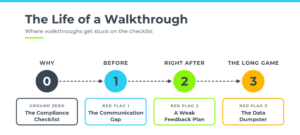
Here’s the life of a walkthrough that actually works:
- Why: Know your purpose.
- Before: Communicate the window, the look-fors, and how the data will be used.
- Right after: Have a feedback plan: 5–10 minutes, face to face, matched to the focus.
- The long game: Use data as a compass.
The checklist tells you every teacher’s been seen. Going beyond it tells you what to do next. When walkthroughs work for your teachers, they work for you.
Free Resources to Get You Started
You don’t have to create a complicated plan or start with a blank page. We made these for you to tailor to your own walkthrough focus:
- Beyond the Checklist Planning Guide: answer the planning questions for each green flag move before your next round of walkthroughs.
- Example Communication Email: a model for letting teachers know what to expect.
- Example School Trend Report: a model for turning walkthrough data into coaching and collaboration next steps.
Where This Goes Next
Whether you’re a principal leading walkthroughs or a coach doing baseline walkthroughs, a walkthrough is only as strong as the coaching conversation that follows it. Coaching is an investment that requires a return, not just activity.
If this post gave you the walkthrough jumpstart, our coaching institutes are where you and your coaches build a framework for coaching that keeps momentum and impacts student learning:
- Instructional Coaching Institute (ICI): for coaches ready to build methodology.
- District Instructional Coach Training (DICI): for districts training coaches at scale, and principals who want their leadership team and coaches on the same page.
- Virtual Instructional Coaching Institute (VICI): for coaches who want the Institute experience remotely.
Learn more about our coaching institutes
Student Engagement: A Mirror, Not a Magic Fix

Courtney Dumas,
CEO
October 29, 2025
In my previous blog, I argued that vaguely instructing teachers to ‘increase student engagement’ isn’t helpful feedback. This week, after a few classroom observations, I realized something else: sometimes what we call an engagement problem isn’t just about engagement.
In my previous blog, I argued that vaguely instructing teachers to ‘increase student engagement’ isn’t helpful feedback. This week, after a few classroom observations, I realized something else: sometimes what we call an engagement problem isn’t just about engagement.
Let’s look at an example in which I co-planned student engagement for a middle school ELA lesson. The goal was to get the students doing more of the work. We decided to have students work with partners and give them a task–Partner A would identify one character’s perspective and Partner B would identify a different character’s perspective using sticky notes. Then they would discuss their evidence with each other before completing a T-chart.
Here’s how that looked in two different classrooms where the teachers planned the exact same engagement strategy for the exact same lesson:
|
Teacher A |
Teacher B |
|
|
But wait…we added student engagement to our plans. Wasn’t that supposed to magically fix instruction? So why were the results between the two classrooms so different? Both teachers tried something new, and that’s exactly what revealed the deeper issue.
Student engagement has so many layers. It’s not just about being fun and entertaining, or just having students talk. It’s not only about motivating students and having them physically participating. True engagement is the product of teacher moves that keep learning flowing.
Neither teacher did anything wrong! In fact, their efforts revealed that “adding student engagement moves” is not a quick fix. There are other elements that critically factor into student learning. We realized the problem wasn’t engagement itself, but what surrounded it. By adjusting three key layers, everything changed.
True engagement is the product of teacher moves that keep learning flowing.
Lesson Pacing
We chunked the lesson into a little bit of teacher reading, partner reading, and independent reading. This kept the lesson pacing snappy and allowed students to engage with the text in different ways. At the end of each chunk, we gave students a quick minute to jot on their note and then turn and discuss with their partner.
Classroom Management
During partner reading and discussion, we designated which partner was to read and which partner would share first. This eliminated the awkward time lapses when students were trying to determine who was going to read and start talking first.
Clarifying Directions and Modeling
We changed the directions so that each student was collecting at least three lines of text that revealed their characters’ perspectives, and we provided a quick two-minute model. Students were way more engaged in actively writing on their sticky notes than in the first period classes.
The data changes in both classrooms during the second run were phenomenal. By making a few quick tweaks, we had built student confidence, set clear expectations, and managed the engagement so that learning could take place. The real payoff came when we had clear moments throughout the lesson where we could monitor if students were on track.
Takeaway for Teachers
Before planning for student engagement, pause and ask yourself:
- Lesson Pacing: Have I chunked the lesson so that there is a balance of teacher, partner/group, and individual work time? Where do I need to give students time to process and practice?
- Classroom Management: Do students know exactly what to do and how to engage? Are there any routines I need to shore up?
- Modeling: Are directions concise? Where will I need to model thinking expectations?
Takeaway for Leaders
Before giving feedback about student engagement, pause and ask yourself:
- Lesson Pacing: Was the pacing clear and varied?
- Classroom Management: Did students know exactly what to do and how to engage?
- Modeling: Were directions concise, and has the teacher modeled the expected thinking?
Often, what looks like an engagement problem is really a sign that one or more of these bulleted items needs tightening. In your next walkthrough or coaching conversation, don’t just look for engagement, look through it to see what is being reflected back in the lesson.
What ‘engagement issues’ have you seen lately that might actually reveal a different instructional need? Let us know in the comments!
Stick It, Sort It, Solve It: Leading Smarter into Year Two Curriculum Implementation
Courtney Dumas,
CEO
April 25, 2025
First-year curriculum implementation can feel like drinking from a firehose for teachers and leaders alike. But buried in the chaos are clues to what’s working and what needs a reset. During a reflection activity with instructional leaders, we asked one simple thing: write down two implementation challenges you’ve seen and heard from teachers.

Nearly every district our team has supported this year is wrapping up the first year of a brand-new curriculum implementation. It’s been meaningful, challenging, and, at times, exhausting work. As the year winds down, our focus is shifting to helping instructional leaders reflect on progress and re-energize for the next phase of implementation, the one that drives a deeper impact for both teachers and students.
But “re-energize” can feel like a tall order when curriculum work comes with so much noise: pacing concerns, logistics, resource overwhelm, and more. It’s easy to slip into the mindset of thinking, “Next year will be better,” without a clear path for how. So the real question becomes: How can we stay strategic, stay focused, and make smart support decisions for year two implementation without drowning in the details?
Enter the Pareto Principle.
In its most simplistic form, the Pareto Principle suggests that 80% of your problems often stem from 20% of the causes. Using that principle, we hypothesized that we could drill down the information we had from initial implementation to identify a few pain points that caused some of the greatest challenges. And guess what? We were right.
Let’s look at one example from a district implementing a brand new 6-8 ELA curriculum. Here are the steps we took with 14 instructional leaders from various schools:
1. Stick It: Identify the Most Prominent Challenges
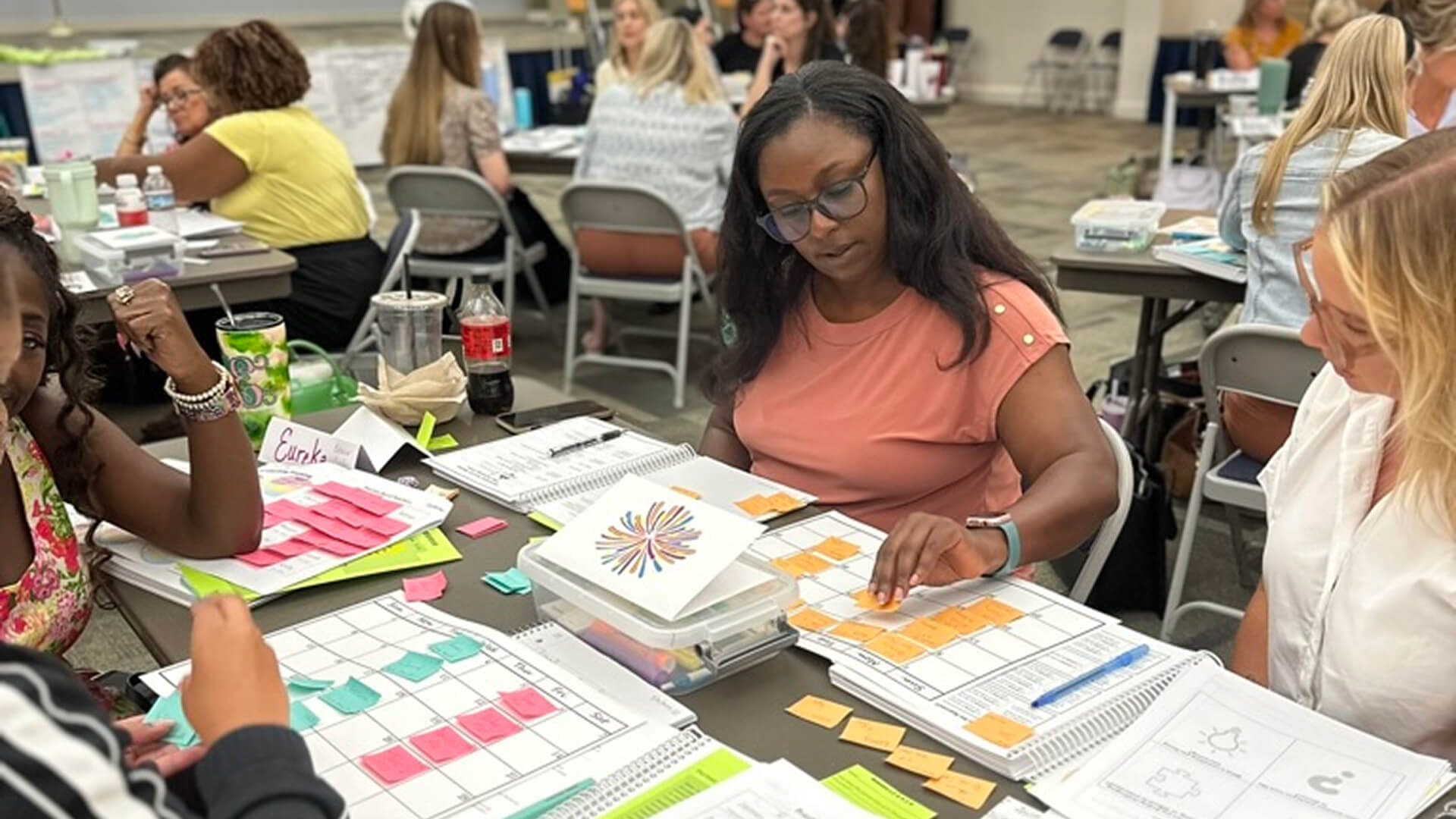
Sometimes the most effective strategies aren’t flashy—they’re sticky! We launched a little “sticky note audit” of implementation by giving each leader two sticky notes. On one, they wrote down one of the most prominent challenges they had observed with curriculum implementation. This could be from quantitative data collected or trends identified through instructional observations. On the other note, we had them write down a top challenge that they frequently heard from the teachers themselves. This qualitative data was the most critical.

2. Sort It: Group the Sticky Notes By Common Topics
Next, we had leaders bring their sticky notes to a table in the center of the room, discuss their challenges, and then sort them into groups based on topic patterns. While this wasn’t a clean process, it actually worked out well. Leaders had to elaborate a little more about their challenges in order to group them effectively, and the discussions of what was really happening in classrooms were powerful. There were some clear, distinct patterns that emerged from the sorting activity as the team created titles for the topic categories.

3. Solve It: Identify the Top Challenges and Identify Next Steps
Not every issue held equal weight. In fact, a few repeated concerns accounted for a large part of the feedback: lesson pacing (25%) and the need for instructional moves for lesson delivery (almost 20%) were the top two contenders. There was another close category– the need for more state test-aligned assessment opportunities– but leaders felt like lesson pacing and instructional moves for lesson delivery were practical places where they could begin designing support for year two. They began looking at how they could leverage collaborative planning structures, professional learning days, and instructional coaching for these two areas.

Making Implementation Manageable
This process wasn’t surgically precise. Honestly, the first time we ever tried this was a little nerve-wracking because we couldn’t predict the outcome and it felt, well, kind of messy. Realistically, no leader is going to have all the answers for all of the issues that arise from trying to use a brand new curriculum–and that’s ok! Every single school and classroom comes with its own set of variables and challenges, but the beauty of this process is that we recognize our limitations and choose to focus on the one or two areas where we can leverage support. In other words, we make implementation manageable.
After all, there’s never going to be a “perfect curriculum.” (Sorry, not sorry, curriculum companies.) It’s always going to come down to the knowledge and skills of the teachers using the materials. This process just helps leaders strategically decide where to spend the most vital resources of time, energy, and money on areas that support teachers in building knowledge and instructional skills as they do the incredible work of teaching students.
This process is also adaptable. While it may not pinpoint a single obvious need that’s clearly above all others, it can be a great place to begin thinking about next steps.
If you give this process a try or adapt it for your own team, we’d love to hear how it goes!
