
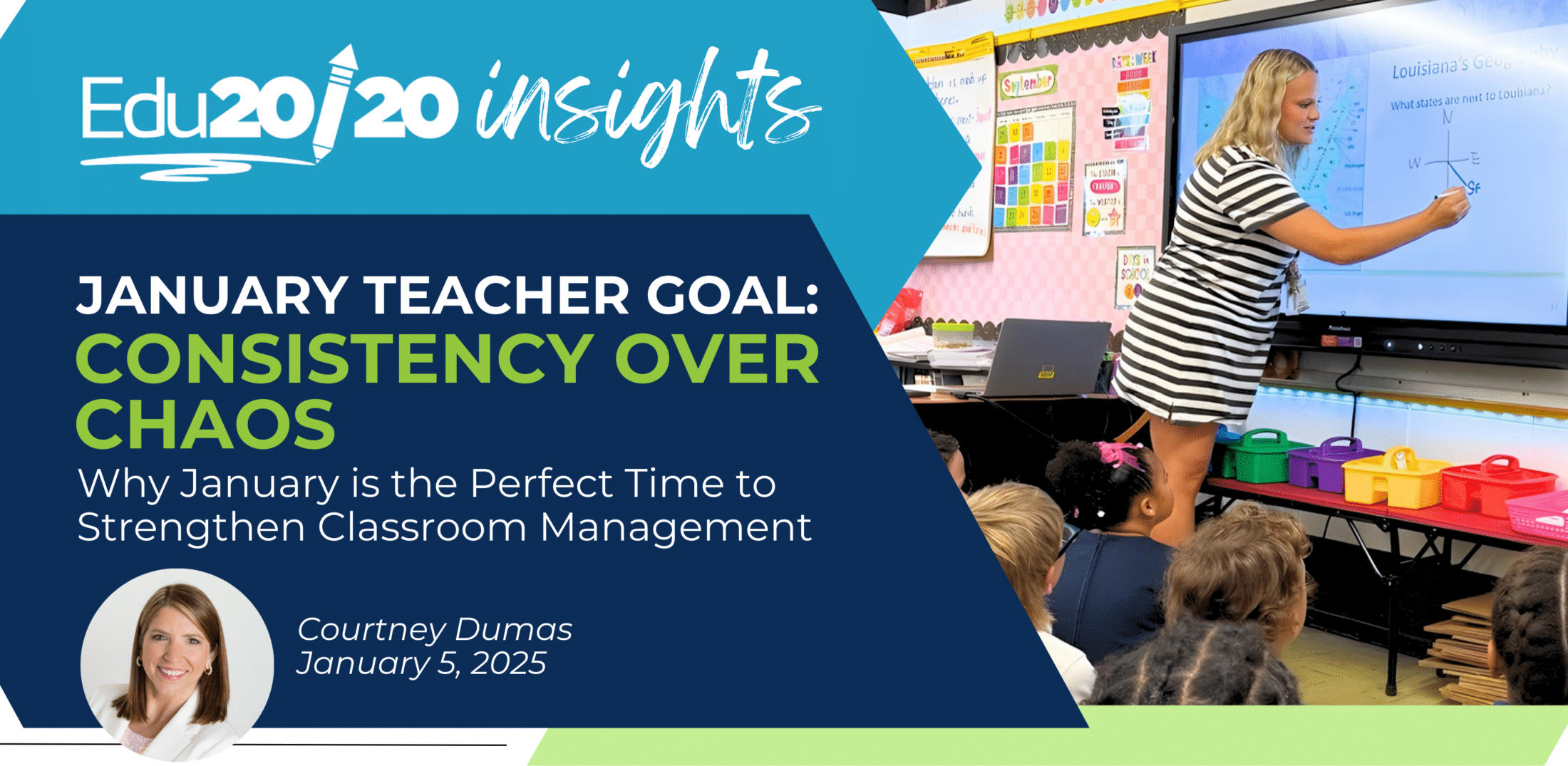
Ahh…good ole January.
The season of fresh starts, new promises, and lofty goals.
Social media feeds are full of last year’s highlight reels alongside personal intentions and declarations of accountability for big change ahead.
Meanwhile, the immense pressure of being an educator is already hard enough without setting resolutions for a new semester. Heck, half of us don’t even remember what state of chaos we left our rooms in after the holiday party, much less what unit of the curriculum we are in.
I’m here to tell you to breathe.
January doesn’t require a complete reinvention. Instead of trying to level up with that creative teacher TikTok idea you saved three months ago, this is the moment to return to what “just good teaching” actually is.
Not the bulletin boards.
Not the cutesy Canva designs.
Not the TPT slideshows that cost whatever’s left of your December check (if there is anything left).
“Just good teaching” is actually defined by a specific set of skills that every effective teacher develops over time. And that skillset is built upon a critical foundation- managing the learning environment. (Yes, that is just a fancy way of saying classroom management, but I needed to ensure your gag reflex was not initially triggered.) People feel some type of way when classroom management is mentioned because the term has been so convoluted and over-simplified that it often has a negative connotation. But this Priority Teaching Skill of Classroom Management is grossly underrated during this time of year when routines and clarity matter most.
Yes, January is a time of change, but consistency is what builds culture.
Before you walk back into the classroom, take a minute to reflect on some of the skills a teacher possesses for solid classroom management:
- Has a signal for getting whole class attention
- Gives directions when students are all quiet and eyes are on the teacher
- Has a go-to redirection routine
- Sets up, signals, and has a very brief time limit for transitions
- Modulates voice to get attention and focus students
- Has a routine for revving students up when their energy is waning
- Greets students in the morning/top of the period and gives a task right away so they enter the classroom with purpose
- Has a simple routine for written responses
- Has a simple routine for discussion
- Has a simple routine for partnering
Which one are you feeling really strong about this year? Which one would you like to strengthen?
Check out some of our staff favorites when it comes to examples of what some of these can look and sound like in your classroom:
Skill | In-Class Example |
Has a signal for getting whole class attention |
|
Gives directions when students are all quiet and eyes are on the teacher |
|
Sets up, signals, and has a very brief time limit for transitions |
|
Modulates voice to get attention and focus students |
|
Greets students in the morning/top of the period and gives a task right away so they enter the classroom with purpose |
|
Has a simple routine for written responses |
|
Has a simple routine for discussion Has a simple routine for partnering |
|
Keep it simple, give yourself grace, and start where it matters most. You don’t need more strategies, more slides, or more ideas. All you need are these strong, consistent routines that free you up to teach. Choose one skill to strengthen, commit to it, and notice the difference you feel during instruction.
Let us know if you try out any of the ideas above or if you have any you’d like to share with readers! Post in the comments below, and be sure to follow us on all the socials!