
Last year, we tackled the important question every instructional coach asks in August: “Where do I even start?” August can feel like a warm-up month, but if you wait for things to settle in, it’s likely your coaching program won’t really be up and running until September.
This year, we are getting even more specific with a blueprint any instructional leader can use to launch a really strong coaching foundation the first month of school. Here’s the good news: you don’t need a finished plan by August! You need three questions answered: What, Who, and When. That’s the whole blueprint, and we’re walking through it below.
Three Questions, Not a Finished System
It’s easy to feel like you need a polished, year-long coaching plan before school even starts. You don’t. Every strong coach we’ve ever worked with builds their program the same way: one clear focus, a clear list of who needs support, and real dates on the calendar. Here are the most important moves to use as your jumpstart:
Move 1 — WHAT: Find Your Instructional Focus
Ask yourself: What do our instructional goals or priority areas already tell us, based on the data we have right now? Even if leadership hasn’t finalized formal goals yet, you can’t wait on that. You need a clear vision of what needs to improve before you can coach toward it.
A few places to start this week:
- Dig into last year’s data: state test scores, benchmarks, and walkthrough trends.
- Meet with your instructional leadership team to talk through possible instructional goals or priority areas.
- Narrow everything down to one or two priority focus areas.
COACHING NOTE Sometimes the instinct is to chase every gap you see in the data, but try to resist that. A coaching focus that tries to cover everything can end up spreading effort too thin. Pick one or two priorities and let that be enough for now. You can always add once you see traction! |
Move 2 — WHO: Identify Who Needs the Most Support
Once you know what you’re coaching toward, the next question is who. Ask: Based on our focus area, who will need the most support? Are there several new teachers who’ll need foundational help? Are there grade-level or subject-level hotspots inside the focus area? These answers will begin your tiering for the rest of the year.
A few places to start this week:
- Pull class rosters and schedules for teachers inside your focus area.
- Identify teachers who are new to the role, grade level, or content this year.
- Flag any grade-level or subject-level hotspots inside the focus area.
COACHING NOTE New teachers will almost always float to the top of your list as expected. But don’t overlook the veteran teacher who is teaching a new grade or a new prep this year. Experience doesn’t always transfer, and “new to this” can apply to anyone. |
Move 3 — WHEN: Put Dates on the Calendar
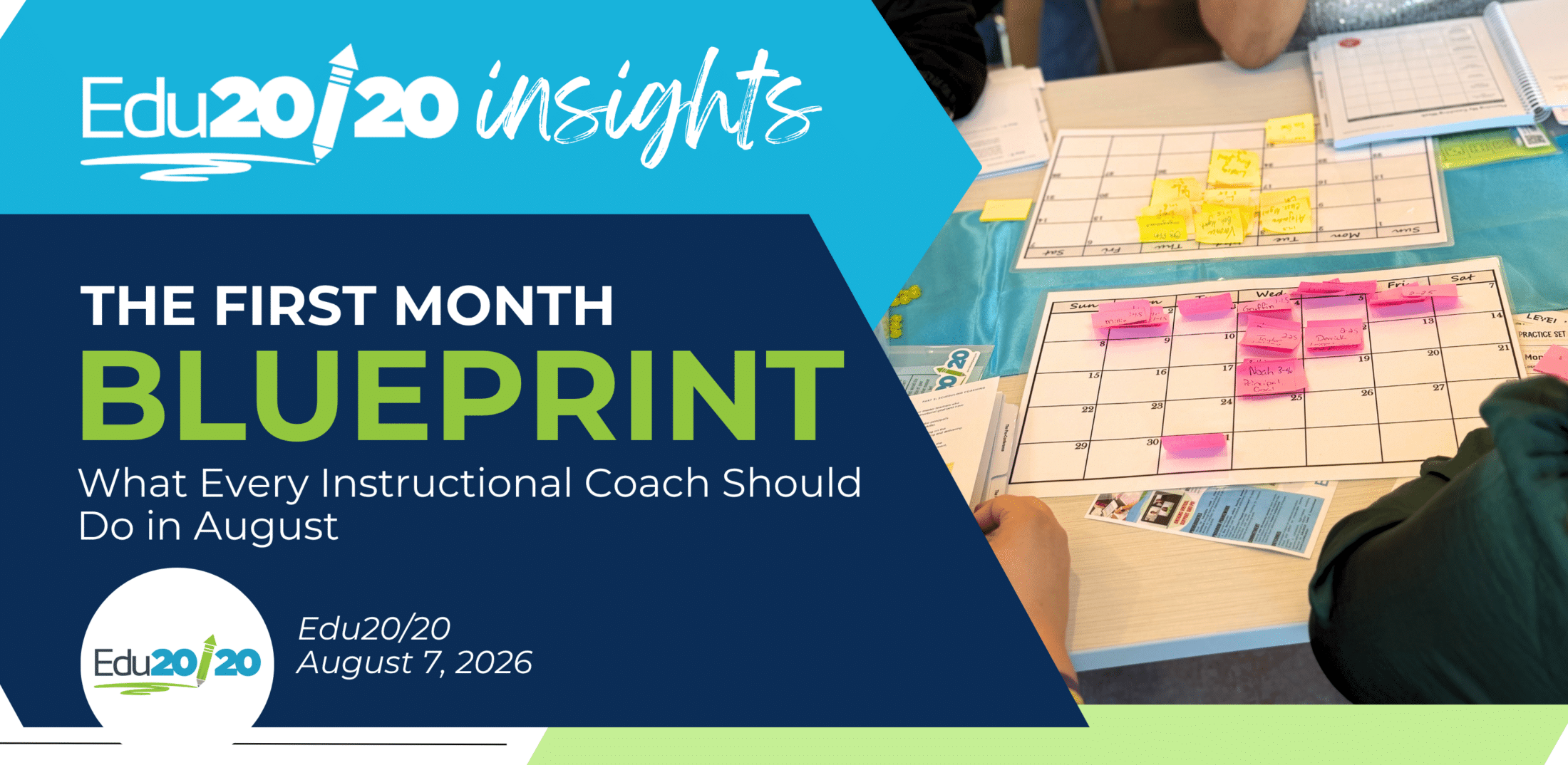
Ask: When will we conduct baseline walkthroughs and begin coaching? Baseline walkthroughs give coaches the clarity needed to differentiate coaching support. We recommend conducting 2 baselines to get an accurate picture of classroom trends and coaching needs. Identify the school schedule (planning periods, daily rhythms) and set actual dates for baselines and first coaching touchpoints. If it’s not on the calendar early, the calendar will start controlling you instead.
One sequencing note that matters more than it seems: communicate your coaching vision to staff before any baseline walkthroughs begin. Walking into a classroom unannounced, before teachers understand what coaching will look like, undercuts the trust you’re trying to build. Share the vision first at a staff meeting or team collaboration time (an email or memo is not recommended), and then start baselines, spread across two full weeks rather than crammed into one.
COACHING NOTE Coaching is built on relationships, and relationships are built on clarity. A short, honest conversation about what coaching is (and isn’t) before you ever step into a classroom will save you months of rebuilding trust later. |
The Blueprint, in Three Lines
- What — the focus. Let the data point to one or two priorities.
- Who — the people. Identify who needs support most, starting with new teachers and hotspots.
- When — the calendar. Communicate first, then run baselines, then launch coaching.
That’s it. That’s the whole blueprint. You don’t need a finished system in August, you just need these three questions answered.
You Don’t Have to Build This From Scratch
Grab our free First Month Blueprint Resource Guide that includes the What/Who/When flow visual, a first month template, and a sample 4-week August calendar with daily tasks you can adapt to your own school. [Download the Resource Guide →]
When you’re ready to go deeper than a single month, Edu20/20 can help there too: the Instructional Coaching Institute (ICI) for coaches ready to learn a framework and get results, District Instructional Coach Training (DICI) for districts training coaches at scale, and the Virtual Instructional Coaching Institute (VICI) for coaches who want the Institute experience remotely.