














Episode 35: Halloween in the Classroom: Costumes, Candy & Chaos | The Edu20/20 Podcast

The Edu20/20 Podcast
October 28, 2026
Halloween in the classroom is a special kind of chaos, especially when the candy starts flowing and classroom management goes out the window. In this Halloween edition of After Hours, Courtney and Shannon share their funniest Halloween memories from teaching, childhood costume disasters, creative school dress-up ideas, and a few classroom pranks that probably wouldn't fly today. From homemade costumes and sugar hangovers to inflatable Ursula and a teacher being chased across the playground dressed as a banana, things get appropriately ridiculous.
Timestamps
00:00 Welcome to the Halloween After Hours special
02:00 Courtney’s modeling career and other distractions
05:05 Halloween traditions in the classroom
07:15 The dreaded post-Halloween sugar hangover
09:03 Childhood Halloween costume disasters
11:28 Favorite costumes and school dress-up ideas
15:56 Classroom pranks and spooky teaching stories
Episode 34 After Hours: When Doing the Right Thing Makes You the Villain | The Edu20/20 Podcast
The Edu20/20 Podcast
October 27, 2026
Sometimes doing what’s right means being the villain in someone else’s story. In this After Hours episode, Courtney and Shannon talk about the very thin line between heroes and villains, especially when you're making hard decisions, setting boundaries, leading others, or having conversations people don't want to hear. They share personal stories about people pleasing, competition, leadership, self-reflection, and learning to stay focused on your purpose even when other people don't agree with you.
Timestamps
00:00 Welcome to After Hours
00:43 The difference between a hero and a villain
03:41 When you’re the villain in someone else’s story
07:05 Being okay with hard decisions
09:37 Competition, comparison & staying focused on your why
12:57 Why leaders have to have hard conversations
16:58 The importance of self-reflection
Primary Source Analysis: 4 Simple Steps to Teach Students

Courtney Dumas,
CEO
October 13, 2026
Teaching source analysis starts with a consistent four-step routine: give students a purpose, observe the source, activate prior knowledge, and infer and apply what they learn. This blog explains why students struggle with complex sources and how to model the questions that help them move beyond memorization toward deeper understanding.
I was born in the 1900s.
That’s a heck of a way to open a blog post, isn’t it? But seriously…
The thing about learning in the 1900s is that most of my schooling involved memorization.
Reading? We read the story every single day. Then the teachers took it away from us, and we had to regurgitate the story elements through an assessment with no fewer than 15 questions.
Social Studies? We listened to the teacher talk, filled in some blanks on our guided notes that matched the underlined words on the overhead projector (ask your grandma what an overhead projector was), and took a test at the end of the week on the facts we had memorized.
Rinse and repeat. Every week–a new story, new facts, and new tests. I could easily ace any of those assessments because I had phenomenal short term memory. The issue was that, a week later, there was no way I could retrieve the information I learned the prior week.
Most schools have 180 days with students. 180. Social studies accounts for, on average, 50 minutes a day. In any given grade level, those 50 minutes a day over 180 days (even if we aren’t accounting for time for assessments, projects, and holidays) are expected to cover an average of 100 years of history. I don’t know about you, but I could fill up 180 days covering the last 10 years of America’s history alone.
The bottom line is this: learning that much content in that amount of time makes only memorization alone insufficient for our students.
We have to go beyond memorizing information.
This brings up the next dilemma: how do we get students moving past memorization and to a point where they internalize the content so deeply that they can retrieve it, ask questions about it, and make reasoned judgements about it?
We have to make it sticky. One way to do this is through the use of various types of sources in social studies classrooms. Sources give students new perspectives on history and provide an anchor to tether their knowledge to.
Many curriculum developers have recognized how big of a role sources can play in students landing their learning. Because of this, source analysis can be seen in various curricula across the country. But it’s one thing to include a variety of sources in your high quality instructional materials. It’s another thing to know how to teach students to properly analyze those sources without freezing up.
In order to get them defrosted when it comes to source analysis, we first need to determine why so many students freeze up when a source lands in front of them.
This usually stems from two different pain points.
First, there’s a consistency gap often found in curricula. Students may be introduced to a graphic organizer or mental model in the early grades, only to be handed an overly complicated version in the years that follow, so they never get the chance to build one reliable habit that grows with them.
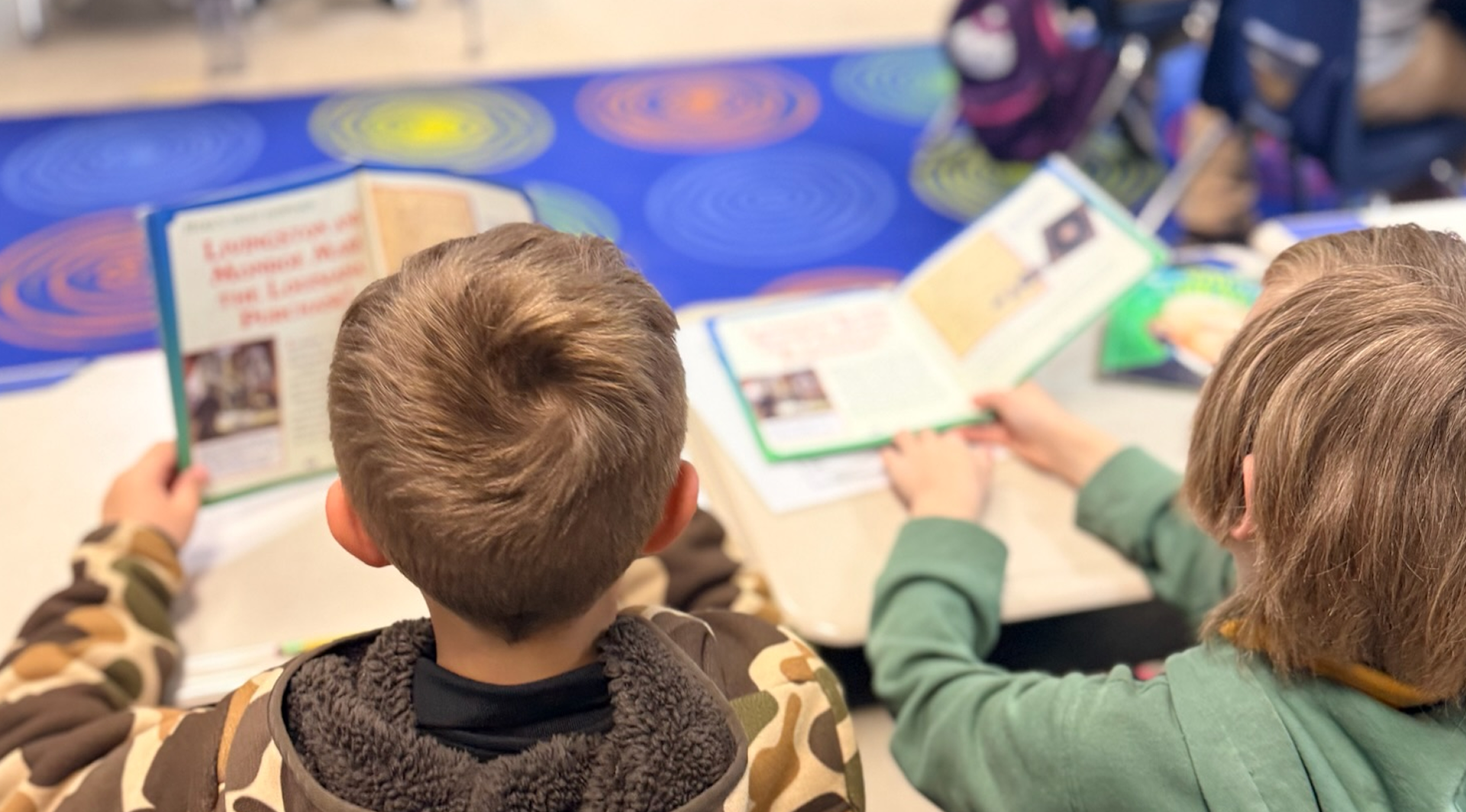
The second pain point is that students come across these sources (especially primary ones) and are overwhelmed due to their complexity. Antiquated vocabulary, complex structure, and a missing purpose often get in the way of students understanding what relevance the primary source has to their learning. If we’re going to use sources to make history sticky, we need to help students access those sources.
Graphic organizers are often used to guide students through the steps of the thought process, but they often become compliance tools rather than comprehension tools.
In one instance, we’ve even seen students draw the word “conclusion” in bubble letters because the graphic organizer told them to “draw a conclusion.” 🫣
So how do we ensure students are understanding how to access the information they need from a primary source?
They need a mental model, and we need to explicitly model the questions we must ask ourselves when we encounter a complex source. Check out these four steps and their accompanying self questions below:
- Give a Purpose: Why am I analyzing this source?
- Observe: What do we see?
- Activate: What do we already know about what we see?
- Infer and Apply: How do our observations and knowledge connect to the purpose of the complex information?
Whether your students have never touched a primary source or analyze them every week, this model gives them one dependable routine to fall back on, no matter how the curricula or the sources change around them. It doesn’t replace the more advanced organizers students may need as they progress. However, it does give them a consistent starting point they can always return to, even when the source in front of them gets harder.
We actually created a strategy for this process, and our new Source Analysis Essentials Guide walks you through the step-by-step moves needed to model this for students in your classroom. Check it out here!
Episode 32: Teacher Burnout is REAL (How to Protect Your Sanity)
The Edu20/20 Podcast
October 7, 2026
In this After Hours episode, Courtney and Shannon get surprisingly serious about practical ways to manage teacher burnout. They talk about shifting your perspective, figuring out what's actually making you feel overwhelmed, getting comfortable saying no, and building simple systems that make your day easier.rn
rnrnTimestampsrnrn00:00 Welcome back to After Hoursrn01:14 How do you avoid teacher burnout?rn02:21 You see what you’re looking forrn04:04 A simple way to shift your perspectivern06:35 What’s actually making you overwhelmed?rn08:05 Why educators need to start saying norn12:05 Build systems that make your life easier
Episode 30: The Wildest Things Teachers Get Roped Into After School | The Edu20/20 Podcast
The Edu20/20 Podcast
September 22, 2026
Teaching is already a full-time job. Naturally, schools also find approximately 47 other things for teachers to do.rnrnIn this After Hours episode, Courtney and Shannon share some of the extracurriculars, clubs, coaching jobs, fundraisers, and questionable after-school activities they somehow got roped into during their teaching careers. From cheer moms and mascot mishaps to bootleg Girls on the Run, a four-week drama club, teacher rock bands, and school fundraisers that probably needed a second opinion, there is a lot to unpack.
rnrnTeaching is already a full-time job. Naturally, schools also find approximately 47 other things for teachers to do.rnrnIn this After Hours episode, Courtney and Shannon share some of the extracurriculars, clubs, coaching jobs, fundraisers, and questionable after-school activities they somehow got roped into during their teaching careers. From cheer moms and mascot mishaps to bootleg Girls on the Run, a four-week drama club, teacher rock bands, and school fundraisers that probably needed a second opinion, there is a lot to unpack.rnrnTimestampsrn00:00 Welcome back to After Hoursrn01:51 Why new teachers get roped into EVERYTHINGrn02:16 Shannon’s traumatic career as a cheer coachrn04:45 Courtney was technically a cheerleaderrn07:36 Coaching basketball u0026amp; dealing with parentsrn08:49 Bootleg Girls on the Runrn10:01 Beta Club u0026amp; Battle of the Booksrn11:14 Pelican Productions u0026amp; teacher rock bandsrn14:21 The four-week drama clubrn15:49 The craziest school fundraisers
Episode 29: Do Teachers Still Need Lesson Plans? | The Edu20/20 Podcast
The Edu20/20 Podcast
September 15, 2026
With high-quality instructional materials doing much of the heavy lifting, do teachers still need to lesson plan? Yes, but that doesn't mean spending hours creating detailed plans no one ever looks at.rnrnIn this episode, Courtney and Shannon break down how teachers and school leaders can simplify lesson planning by focusing on the planning moves that actually impact instruction and create accountability without turning lesson plans into another compliance task.
rnrnWith high-quality instructional materials doing much of the heavy lifting, do teachers still need to lesson plan? Yes, but that doesn’t mean spending hours creating detailed plans no one ever looks at.rnrnIn this episode, Courtney and Shannon break down how teachers and school leaders can simplify lesson planning by focusing on the planning moves that actually impact instruction and create accountability without turning lesson plans into another compliance task.rnrnTimestampsrn00:00 The lesson planning debatern01:48 Do teachers still need lesson plans with HQIM?rn03:14 Why teachers still need to plan before teachingrn05:36 Should leaders require lesson plans?rn06:53 How to simplify lesson planningrn07:40 The Big Four lesson planning movesrn09:02 Leaders: Model your lesson planning expectationsrn10:42 How to monitor lesson plans without checking every onern13:05 Building a manageable lesson planning systemrn15:06 Explain the u0022whyu0022 behind your expectationsrn16:31 What nearly 400 classroom observations taught us
Episode 28: Get to Know Us: Books, Concerts, Cult Stories & Teacher Stress | The Edu20/20 Podcast
The Edu20/20 Podcast
September 15, 2026
What happens when we ditch the education talk and just start asking each other questions? Things get weird pretty quickly.rnrnIn this After Hours episode, Courtney and Shannon share their favorite books, concerts and TV shows, tell a few cult stories, introduce some very particular children and cats, and discuss their highly scientific methods for surviving stress.
rnrnWhat happens when we ditch the education talk and just start asking each other questions? Things get weird pretty quickly.rnrnIn this After Hours episode, Courtney and Shannon share their favorite books, concerts and TV shows, tell a few cult stories, introduce some very particular children and cats, and discuss their highly scientific methods for surviving stress.rnrnTimestampsrn00:00 Welcome back to After Hoursrn01:30 Our favorite books and seriesrn04:33 Favorite concerts u0026amp; our Swiftie confessionrn06:14 Concerts, cult life u0026amp; cheating for the Lordrn08:16 Our favorite TV showsrn09:56 Kids, cats u0026amp; extremely picky eatersrn12:28 How we deal with stress
Episode 27: 3 Strategies to Make Learning Stick | The Edu20/20 Podcast
The Edu20/20 Podcast
September 15, 2026
Students can look like they're listening, complete every assignment, and still not actually learn the content.rnrnIn this episode, Courtney and Shannon share three simple teaching strategies that help students retrieve, process, and practice what they're learning so teachers can check for real understanding, not just compliance.
rnrnStudents can look like they’re listening, complete every assignment, and still not actually learn the content.rnrnIn this episode, Courtney and Shannon share three simple teaching strategies that help students retrieve, process, and practice what they’re learning so teachers can check for real understanding, not just compliance.rnrnTimestampsrn00:00 Are students listening or actually learning?rn01:26 What is retrieval practice?rn04:54 Strategy #1: Retrieval before reviewrn07:49 Strategy #2: Chunk and checkrn13:03 Strategy #3: Practice with a productrn14:29 Stop checking for completion instead of comprehensionrn16:01 Why copying notes doesn’t guarantee learning
Episode 26: The Teachers You’ll Find in Every Professional Development | The Edu20/20 Podcast
The Edu20/20 Podcast
September 15, 2026
Every professional development session has the same cast of characters: the eager learner, the side talkers, the emergency phone-call person, the paper grader, and the one who always has something to add or question.rnrnIn this After Hours episode, Courtney and Shannon confess their own bad PD behavior, share stories from leading teacher training, and somehow end up discussing Vaseline, gloves, and school bathroom emergencies.
rnrnEvery professional development session has the same cast of characters: the eager learner, the side talkers, the emergency phone-call person, the paper grader, and the one who always has something to add or question.rnrnIn this After Hours episode, Courtney and Shannon confess their own bad PD behavior, share stories from leading teacher training, and somehow end up discussing Vaseline, gloves, and school bathroom emergencies.rnrnTimestampsrn00:00 Welcome back to After Hoursrn01:01 Bad teacher behaviors in professional developmentrn03:22 When the room gives you absolutely nothingrn05:03 The people you meet in every PDrn09:20 Grading papers during staff meetingsrn11:00 The person who always knows morern13:03 The Vaseline and gloves storyrnrnu0026nbsp;
3 Back-to-School Teacher Tips That Will Save You Hours | The Edu20/20 Podcast | Episode 23
Edu20/20
August 4, 2026
Courtney and Shannon share three back-to-school strategies that save hours without adding to your plate: teaching classroom routines first, building a parent FAQ (free template included), and mapping your content before school starts.
The first weeks of school can set the tone for your entire year. In this episode, Courtney Dumas and Shannon Streett share three simple strategies to improve classroom management, streamline parent communication, and get into your content faster, without adding more to your plate.
Chapters:
00:00 Why doing less leads to more
01:39 Teach these classroom routines first
05:35 The parent FAQ every teacher needs
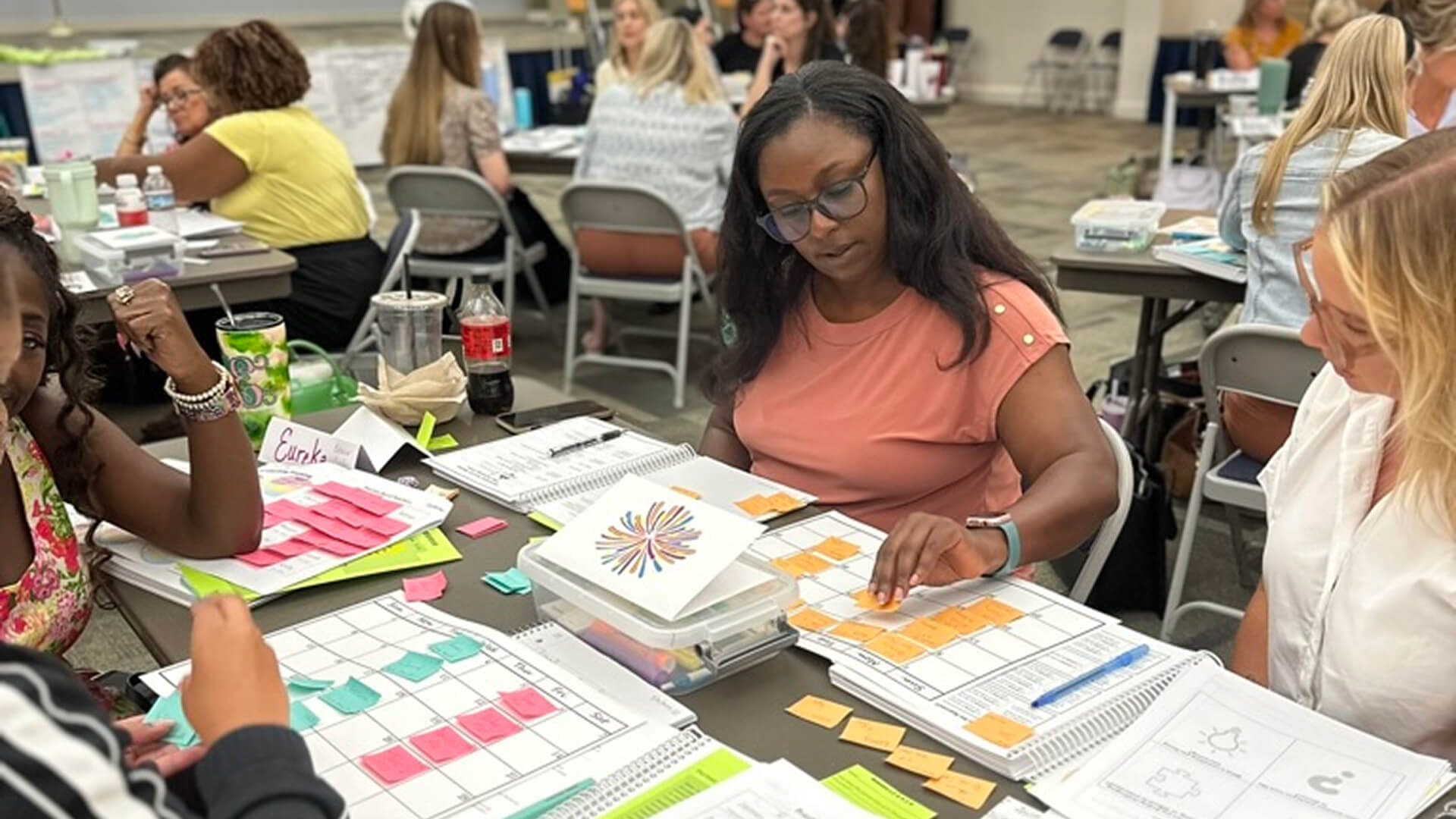
10:23 Map your content before school starts
13:20 Free Classroom Parent FAQ Template
14:51 One final reminder before the school year begins
🎁 Free Resource: Classroom Parent FAQ Template: [https://drive.google.com/file/d/1ByFzU7SF6C2w3IJNitV0J8lEfWHTWMNx/view?usp=sharing]