


















Student Engagement: A Mirror, Not a Magic Fix

Courtney Dumas,
CEO
October 29, 2025
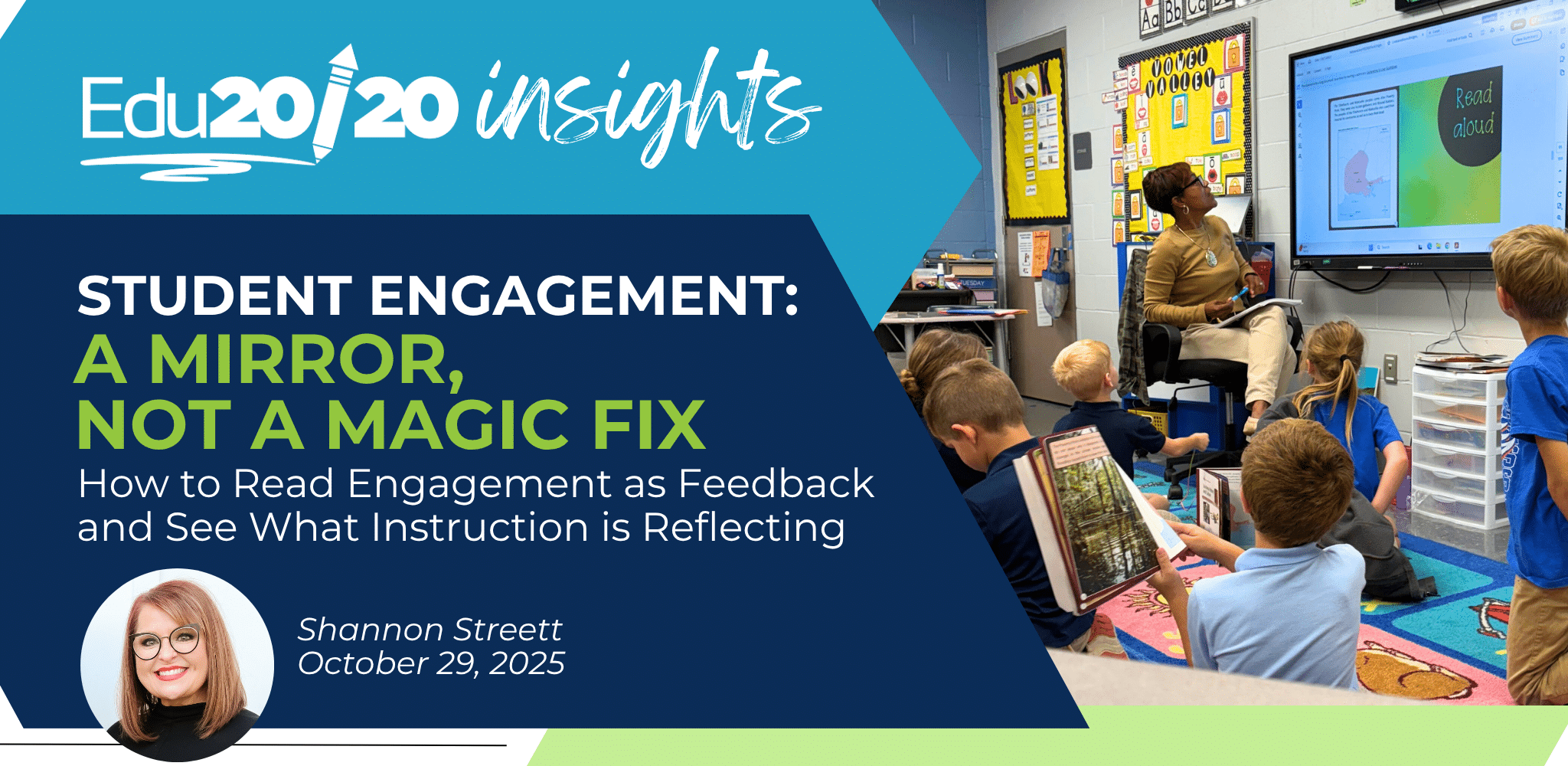
In my previous blog, I argued that vaguely instructing teachers to ‘increase student engagement’ isn’t helpful feedback. This week, after a few classroom observations, I realized something else: sometimes what we call an engagement problem isn’t just about engagement.
In my previous blog, I argued that vaguely instructing teachers to ‘increase student engagement’ isn’t helpful feedback. This week, after a few classroom observations, I realized something else: sometimes what we call an engagement problem isn’t just about engagement.
Let’s look at an example in which I co-planned student engagement for a middle school ELA lesson. The goal was to get the students doing more of the work. We decided to have students work with partners and give them a task–Partner A would identify one character’s perspective and Partner B would identify a different character’s perspective using sticky notes. Then they would discuss their evidence with each other before completing a T-chart.
Here’s how that looked in two different classrooms where the teachers planned the exact same engagement strategy for the exact same lesson:
|
Teacher A |
Teacher B |
|
|
But wait…we added student engagement to our plans. Wasn’t that supposed to magically fix instruction? So why were the results between the two classrooms so different? Both teachers tried something new, and that’s exactly what revealed the deeper issue.
Student engagement has so many layers. It’s not just about being fun and entertaining, or just having students talk. It’s not only about motivating students and having them physically participating. True engagement is the product of teacher moves that keep learning flowing.
Neither teacher did anything wrong! In fact, their efforts revealed that “adding student engagement moves” is not a quick fix. There are other elements that critically factor into student learning. We realized the problem wasn’t engagement itself, but what surrounded it. By adjusting three key layers, everything changed.
True engagement is the product of teacher moves that keep learning flowing.
Lesson Pacing
We chunked the lesson into a little bit of teacher reading, partner reading, and independent reading. This kept the lesson pacing snappy and allowed students to engage with the text in different ways. At the end of each chunk, we gave students a quick minute to jot on their note and then turn and discuss with their partner.
Classroom Management
During partner reading and discussion, we designated which partner was to read and which partner would share first. This eliminated the awkward time lapses when students were trying to determine who was going to read and start talking first.
Clarifying Directions and Modeling
We changed the directions so that each student was collecting at least three lines of text that revealed their characters’ perspectives, and we provided a quick two-minute model. Students were way more engaged in actively writing on their sticky notes than in the first period classes.
The data changes in both classrooms during the second run were phenomenal. By making a few quick tweaks, we had built student confidence, set clear expectations, and managed the engagement so that learning could take place. The real payoff came when we had clear moments throughout the lesson where we could monitor if students were on track.
Takeaway for Teachers
Before planning for student engagement, pause and ask yourself:
- Lesson Pacing: Have I chunked the lesson so that there is a balance of teacher, partner/group, and individual work time? Where do I need to give students time to process and practice?
- Classroom Management: Do students know exactly what to do and how to engage? Are there any routines I need to shore up?
- Modeling: Are directions concise? Where will I need to model thinking expectations?
Takeaway for Leaders
Before giving feedback about student engagement, pause and ask yourself:
- Lesson Pacing: Was the pacing clear and varied?
- Classroom Management: Did students know exactly what to do and how to engage?
- Modeling: Were directions concise, and has the teacher modeled the expected thinking?
Often, what looks like an engagement problem is really a sign that one or more of these bulleted items needs tightening. In your next walkthrough or coaching conversation, don’t just look for engagement, look through it to see what is being reflected back in the lesson.
What ‘engagement issues’ have you seen lately that might actually reveal a different instructional need? Let us know in the comments!
Stop Saying “Increase Student Engagement”
Courtney Dumas,
CEO
October 27, 2025
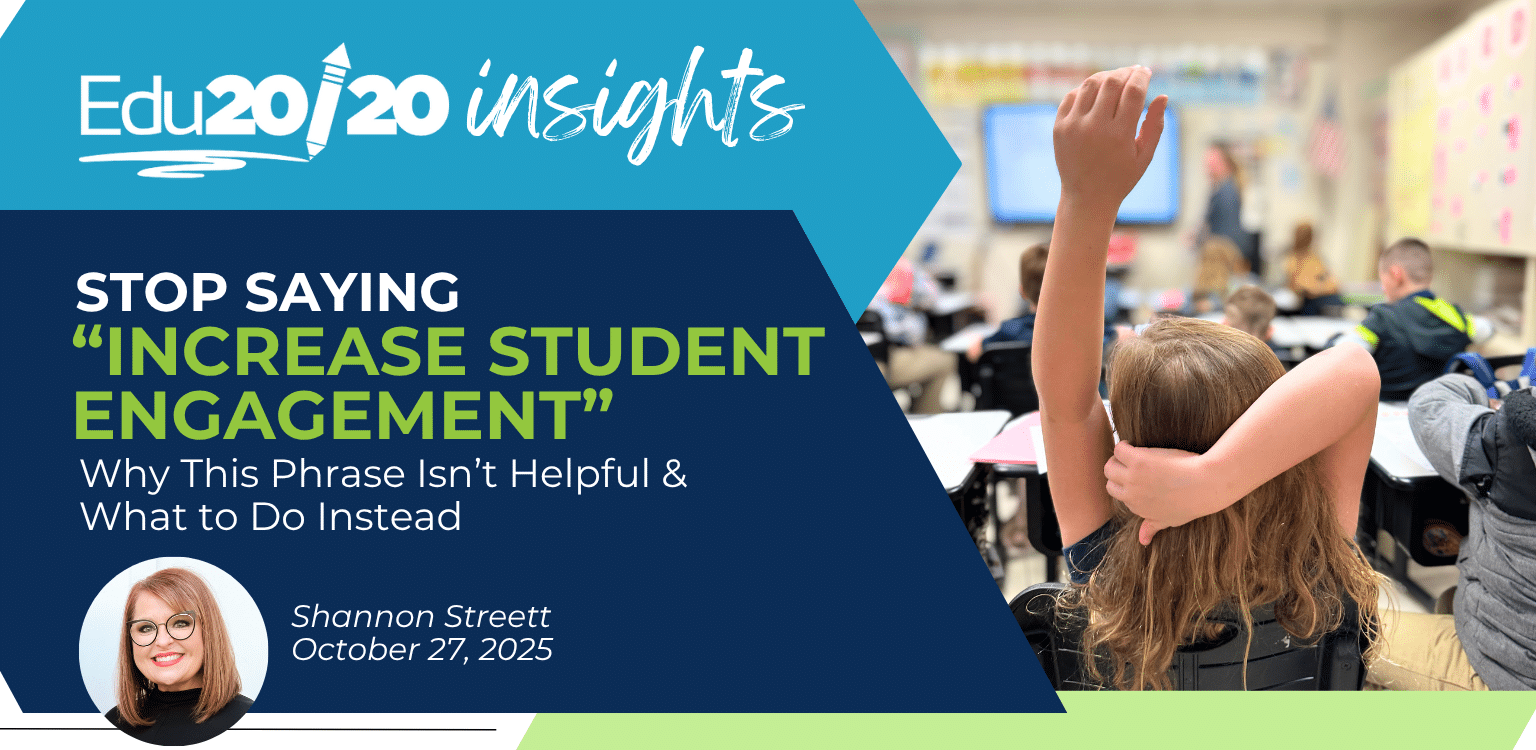
“Let’s all work to increase student engagement so that students can own their learning!” has been a collective rallying cry for a while now. But, if we are making it a priority and going so far as to add it to lesson planning requirements , why isn’t it translating to classroom practice or higher student outcomes? I’ve realized that giving general feedback to “increase student engagement” just isn’t good practice. Here are some feedback strategies that will get you the results you want to see.
In the past two months alone, six school leaders have told me that ‘increasing student engagement’ is a top priority. Some have even redesigned lesson planning requirements and made it a focus in collaborative planning sessions. I’m guilty of having given that advice to schools and teachers over the past several years, as well. “Let’s all work to increase student engagement so that students can own their learning!” has been a collective rallying cry for a while now.
But, if we are making it a priority and going so far as to add it to lesson planning requirements , why isn’t it translating to classroom practice or higher student outcomes?
It’s because educators have vastly different perceptions of what student engagement actually means. It’s because student engagement is layered. No single formula works in every classroom. And honestly, planning for student engagement can seem daunting if it’s seen as “one more thing” to add to the lesson planning list.
Teachers already know students need to be engaged. So when a leader says, ‘increase student engagement’ after an observation, it can sting. Most teachers are already trying everything they can to keep minds active and hands raised. When that effort goes unseen, the feedback can feel deflating, like no amount of trying is ever enough.
But it’s not their fault. I’ve realized that giving general feedback to “increase student engagement” just isn’t good practice. The feedback we should be giving instead is a tailored, concrete move that the teacher could use to improve instruction in the very next lesson. It should also serve as a strategy that can be replicated into other lessons with minimal preparation.
Instead of vague directives, here are some ways to turn a broad statement into concrete, bite-sized feedback.
|
Try This |
Example |
|
During a lesson with 26 students, the same 5 students kept raising their hands to volunteer answers to questions. The rest of the students weren’t engaging. |
|
“To increase the number of students answering questions, embed a 30-second ‘turn and talk’ opportunity for students to discuss the answer with a partner. Then ask the question again whole-group.” or “During the two most important questions of the lesson, incorporate a stop-and-jot in which students quickly jot their responses on a sticky note or whiteboard, and turn and share with a partner. This will allow you to monitor student understanding while they engage in the thinking.” or If only a few students are participating in a group activity, suggest something like this: “Have students jot their answer first, then whip around the table to share out. This will ensure that 100% of students are responding.” |
|
The examples above can easily be transferred across lessons with minimal prep and management. |
But, if we are making it a priority and going so far as to add it to lesson planning requirements , why isn’t it translating to classroom practice or higher student outcomes?
This kind of feedback may feel too simplified when lack of student engagement is an overwhelming problem, but trust the process and watch the difference. Something exciting happens when a teacher can take a bite-sized action and see instant results in student engagement. As an added bonus, it establishes you as a partner in improving data and outcomes, not as someone giving a subjective review of their performance.
If you want teachers to increase engagement, start by increasing the clarity of your feedback.
The impact will surprise you. Read our next blog in this series where we’ll break down more coaching moves that actually stick!